In forging, every die tells a story. Its steel grade decides how long it lasts, how smooth production runs, and how good the final product looks. Some last longer, some deliver sharper precision, and some balance cost with performance. Behind each of these outcomes lies one major choice is the steel grade used to craft the die.
Two steels often step into this role: DB6 and H13. Both are strong, both resist wear, but they shine in different ways. DB6 is the tough fighter, built to handle shock loads in heavy-duty forging. H13 is the precision player, balancing hardness and heat resistance for high-performance dies.
Choosing between them isn’t just technical, it’s about selecting the right steel need for your operations. Whether you’re in automotive forging, heavy engineering, or industrial equipment manufacturing, understanding the differences between DB6 and H13 can help you decide which steel will carry your production forward.
Overview of DB6 Tool Steel
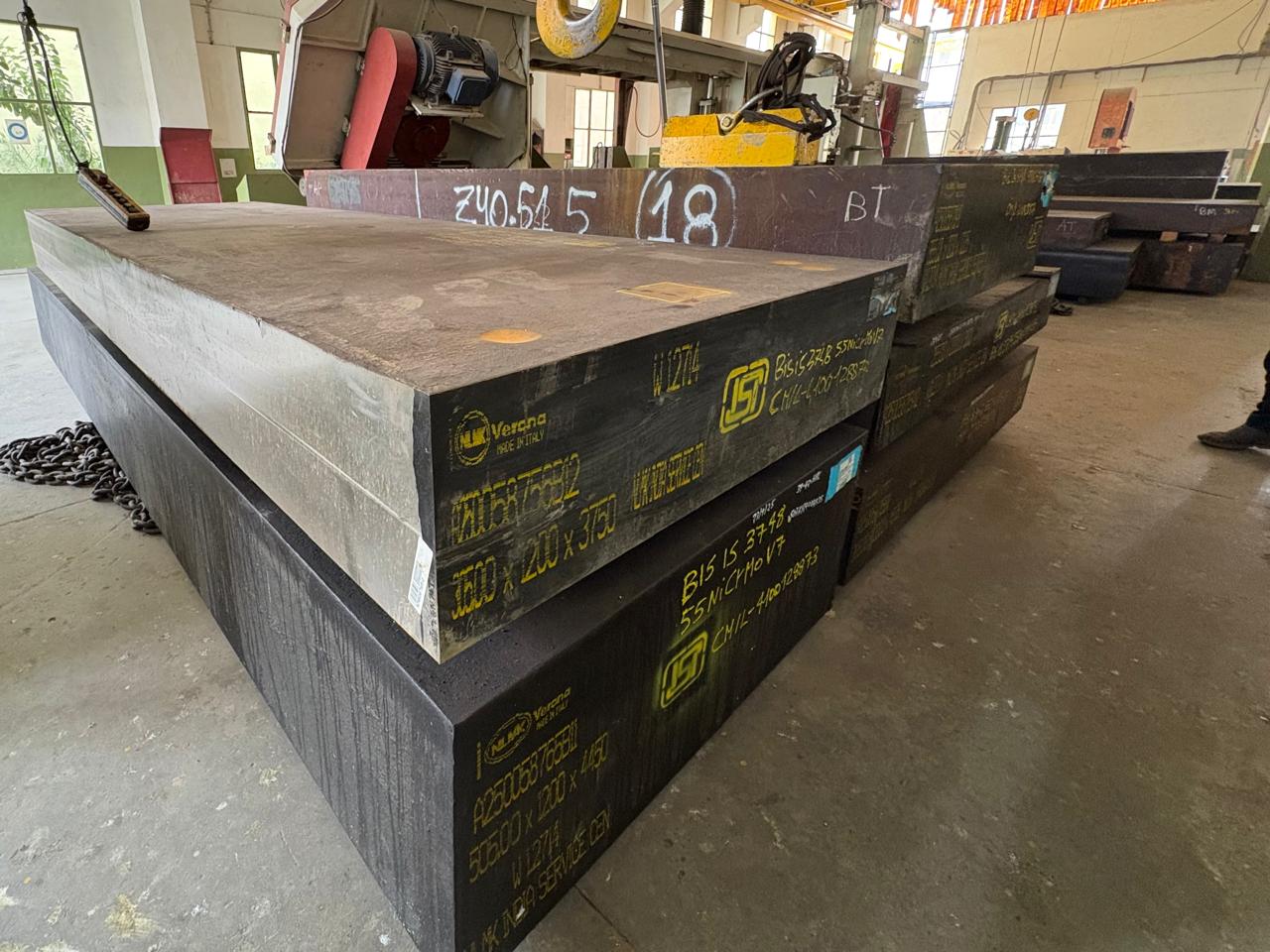
DB6 is a high-toughness hot work tool steel commonly used for hammer forging dies and heavy-duty tooling. It is generally considered equivalent to DIN 1.2714.
Key features of DB6 steel:
- Very high toughness
- Excellent resistance to impact loads
- Good wear resistance
- Ideal for hammer forging operations
Because of its toughness, DB6 is preferred where tools face repeated mechanical shock.
Overview of H13 Tool Steel
H13 is one of the most widely used hot work tool steels due to its strong heat resistance and hardness stability at high temperatures.
Key features of H13 steel:
- Excellent heat resistance
- Good wear resistance
- High hardness retention at elevated temperatures
- Suitable for hot work tooling
H13 is commonly used in die casting, extrusion, and hot forging applications.
Chemical Composition Comparison
The chemical composition of these steels influences their mechanical properties and performance.
| Element | DB6 Steel | H13 Steel |
| Carbon | 0.50 – 0.60% | 0.35 – 0.42% |
| Chromium | 1.00 – 1.30% | 4.75 – 5.50% |
| Nickel | 1.50 – 1.80% | — |
| Molybdenum | 0.40 – 0.50% | 1.10 – 1.75% |
| Vanadium | — | 0.80 – 1.20% |
Nickel in DB6 increases toughness, while chromium and vanadium in H13 improve heat resistance.
Hardness Comparison
Hardness plays an important role in determining the wear resistance and durability of tool steels.
| Condition | DB6 Steel | H13 Steel |
| Annealed Condition | 200 – 240 HB | 190 – 220 HB |
| Hardened & tempered | 50 – 54 HRC | 48 – 52 HRC |
Both steels achieve similar hardness, but their performance differs due to toughness and heat resistance.
Applications of DB6 Steel
DB6 steel is widely used in industries requiring tools that can withstand high impact forces includes.
- Hammer forging dies
- Heavy duty forging tools
- Shear blades
- Industrial punches
- Large forming dies
These tools often experience repeated mechanical shock, making DB6 steel an ideal choice.
Applications of H13 Steel
H13 steel is commonly used in hot work tooling where high temperatures are involved includes.
- Die casting dies
- Hot extrusion tools
- Aluminum die casting molds
- Plastic injection molds
- Hot forging dies
Its excellent thermal stability makes it suitable for processes involving molten metals or continuous heating.
Key Differences Between DB6 and H13 Steel
| Toughness | Very high | High |
| Heat resistance | Good | Excellent |
| Wear resistance | Good | Very good |
| Impact resistance | Excellent | Moderate |
| Typical use | Hammer forging dies | Hot work dies |
This comparison highlights that both steels serve different purposes in industrial tooling.
Which Steel Should You Choose?
The choice between DB6 and H13 steel depends on the operating conditions of the tooling.
| Choose DB6 Steel for | Choose H13 Steel for | |
| Heavy hammer forging | High temp applications | |
| High impact loads | Die Casting | |
| Large forging dies | Hot Extrusion process |
Understanding the working conditions helps engineers select the most suitable tool steel.
Tips for Improving Die Life
when selecting high-quality die steel, manufacturers must follow several practices to improve die performance:
- Ensure Proper heat treatment
- Maintain Correct die design
- Use appropriate lubrication during forging
- Control operating temperatures
These practices help reduce tool wear and prevent premature failure.
Frequently Asked Questions (FAQs)
1.Is DB6 better than H13 steel?
DB6 steel is better for applications requiring high toughness and impact resistance excels in heavy forging applications, while H13 steel is better for high-temperature hot work processes.
2.What is DB6 steel equivalent to?
DB6 steel is commonly considered equivalent to DIN 1.2714 tool steel.
3.What is the hardness of DB6 steel?
After heat treatment, DB6 steel typically reaches a hardness of approximately 50 to 54 HRC.
4.Which steel is better for hammer forging dies?
DB6 steel is generally preferred due to its superior toughness and impact resistance.
5.Which steel offers better value for money in the long term?
H13 offers superior durability in extreme conditions, while DB6 provides cost-efficiency for general use.
6.Is DB6 steel suitable for hot work applications?
Yes, DB6 steel performs well in hot work applications due to its strength and resistance to elevated temperatures.
7.Where can I source premium DB6 and H13 steels?
Virat Special Steels provides premium quality DB6 and H13 steel for forging and industrial tooling applications across India.
8.Is Virat Steels a reliable supplier for DB6 tool steel?
Yes, Virat Steels is known as a major importer, exporter, and stockiest of tools and die steels including DB6 / DIN 1.2714.
9.Do suppliers in India stock European grades?
Yes. Virat Special Steels is one of the best stockiest and suppliers of European grades such as DIN 1.2714, DIN 1.2344 etc.
10. Can DB6 be welded or re‑hardened?
Yes, DB6 tool steel can be welded and re-hardened, but it must be done carefully to maintain its mechanical properties and avoid cracking.
Looking for high-quality DB6 or H13 tool steel?
Virat Steels supplies premium tool and die steel grades for industries across India. Contact our team to get more details about available sizes and technical specifications suitable for your applications.
https://www.viratsteels.com/db6.html info@viratsteels.com +91 98140-21775