
High Carbon and High Chromium tool steel HCHCR-D2 and HCHCR-D3! Excellent toughness and high hardness at elevated temperatures.
HCHCR D2 & D3 are commonly used tool steel grades in the Indian steel industry. These grades are similar to the international standards AISI D2 and AISI D3, respectively.
- HCHCR-D2 (or AISI D2) is a high-carbon, high-chromium tool steel. It contains approximately 1.5% carbon, 12% chromium, 0.8% molybdenum, 1% vanadium, and smaller amounts of other alloying elements. This composition contributes to its excellent wear resistance, high hardness, and good dimensional stability. HCHCR-D2 steel is known for its ability to retain its hardness and cutting performance even under high temperatures.
- HCHCR-D3 (or AISI D3) is a high-carbon, high-chromium tool steel with added cobalt. It typically contains around 2.0% carbon, 12% chromium, 0.2% molybdenum, 0.5% vanadium, 1% cobalt, and smaller amounts of other elements. This composition gives HCHCR-D3 steel good hardness, wear resistance, and dimensional stability. It is particularly suitable for applications that require high wear resistance, such as blanking and forming dies.
Both HCHCR D2 & D3 steels are primarily used in cold work applications.
They are commonly employed in the manufacturing of various cutting tools, such as punches, dies, slitters, and forming tools. These steels offer excellent strength, toughness, and wear resistance, allowing them to withstand the mechanical stresses encountered in cold work operations.
Heat treatment processes, such as quenching and tempering, are typically applied to HCHCR-D2 and HCHCR-D3 steels to achieve the desired hardness and toughness. These processes enhance the steel’s properties and ensure optimum performance in their respective applications.
In summary, HCHCR D2 & D3 are popular tool steel grades in India, similar to the international standards AISI D2 and AISI D3. They are utilized in cold work applications, offering high hardness, wear resistance, and dimensional stability, making them suitable for various cutting tools and forming dies.
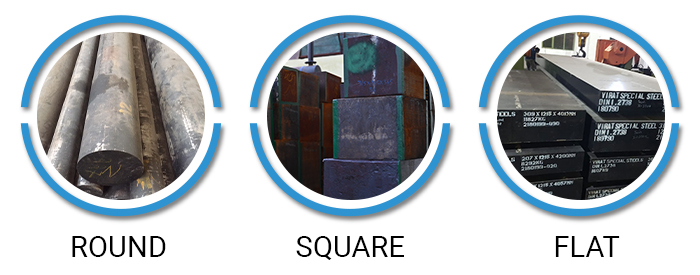
Virat Special Steels is largest stockiest and supplier of HCHCR D2 & D3 tool steel in flat, square and round bar. We provide steel in all sizes as your requirements. Consult our team who will assist you for HCHCR-D2 and HCHCR-D3 steel query.
Contact us today to buy the best quality HCHCR D2 & D3 for your tooling needs!
🌐https://www.viratsteels.com 📬 info@viratsteels.com ☎+91 98140-21775
Need help choosing between DIN 1.2714 Steel , DB6, and H13 for your next die?
Talk to our technical sales team before you place the order — it’s a five-minute call that can save you a failed die six months from now.
Visit us: Gurgaon (Haryana) | Ludhiana (Punjab)
FAQs
1. What is HCHCR D2 tool steel?
HCHCR D2 is a high-carbon, high-chromium cold work tool steel known for excellent wear resistance, hardness, and dimensional stability.
2. What is HCHCR D3 tool steel used for?
HCHCR D3 steel is widely used for blanking dies, forming dies, punches, shear blades, and other tooling applications requiring high wear resistance.
3. What is the difference between HCHCR D2 & D3 steel?
D2 offers better toughness and machinability, while D3 provides higher wear resistance due to its higher carbon content.
4. What are the applications of HCHCR D2 & D3 steel?
These steels are used in punches, dies, slitters, forming tools, blanking tools, shear blades, and cold work tooling applications.
5. Why choose Virat Special Steels for HCHCR D2 & D3 steel?
Virat Special Steels offers certified HCHCR D2 and D3 steel in flat, round, and square bars with ready stock, quality assurance, and expert technical support.
6. What hardness can HCHCR D2 & D3 achieve after heat treatment?
HCHCR D2 and D3 steels can typically achieve hardness levels of 58–62 HRC, making them suitable for demanding wear-resistant tooling applications.
7. What are the key benefits of HCHCR D2 & D3 tool steel?
HCHCR D2 and D3 tool steels offer excellent wear resistance, high hardness, good dimensional stability, and long tool life, making them ideal for cold work tooling applications.
8. Is HCHCR D2 or D3 better for high-wear applications?
HCHCR D3 generally provides higher wear resistance due to its higher carbon content, while HCHCR D2 offers a better balance of wear resistance and toughness for versatile tooling applications.